
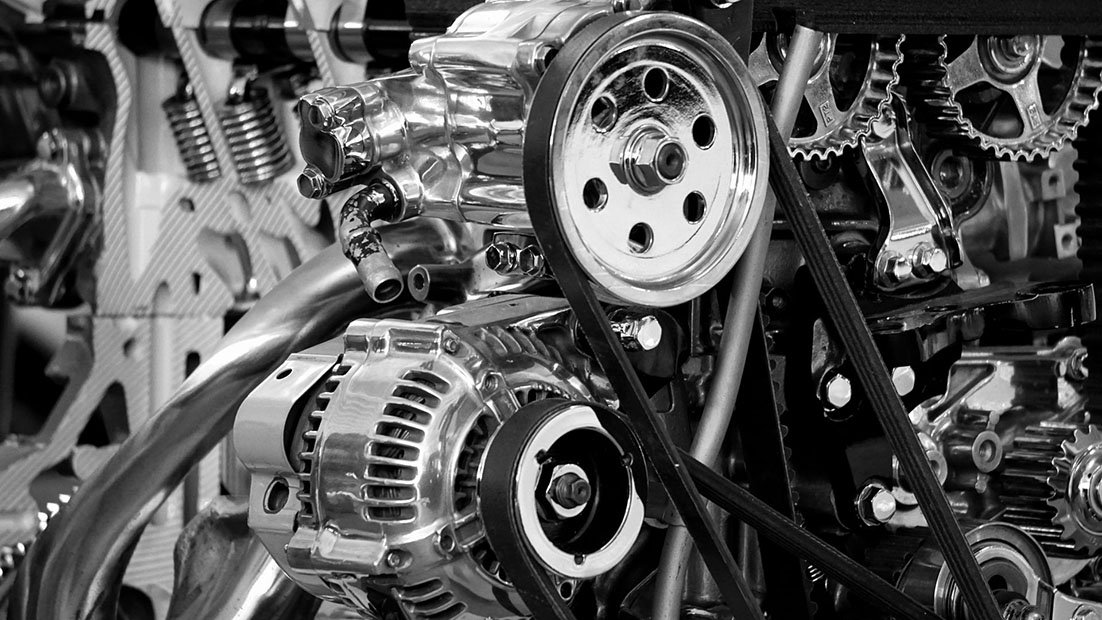
Electric motors turn electrical energy into mechanical motion. They drive pumps, fans, conveyors and machinery. This guide is for buyers. It explains how electric motors work and the main parts of an electric motor. It then shows what to specify, what to expect on price and lead time, and how to check a supplier before you pay.
Key Takeaways
- Type first: AC induction motors are widely used for fixed-speed industrial loads and can run at variable speed with a drive. Brushless DC motors are often chosen for compact, efficient, variable-speed products.
- Parts decide quality: windings, laminations, bearings and insulation class strongly influence quality and lifespan, so compare them as well as the price.
- Match your standards: confirm supply voltage and 60 Hz frequency, NEMA or IEC frame size, and UL or CSA marks where required. Also check which DOE efficiency requirements apply to your motor type and category. IE classes such as IE3 and IE4 help you compare suppliers, but US requirements are set by DOE’s own efficiency tables.
- Compare landed cost: add duties, freight and broker fees to the unit price. Motors fall under HTS heading 8501, so confirm the full code. Plan about 6 to 10 weeks door to door for catalog motors.
- Test before you pay: approve a sample, then inspect the order before you release the balance.
How Do Electric Motors Work?
An electric motor uses magnetic force to create rotation. Electric current flows through a coil of wire and produces a magnetic field. That field pushes against another magnetic field, and the push turns a shaft.
The motor must keep switching its magnetic fields, or it would stop after a half turn. How it does this depends on the type:
- AC motors use alternating current. The changing current creates a rotating magnetic field in the stator, and the rotor follows it.
- Brushed DC motors use a commutator and brushes to reverse the current mechanically.
- Brushless DC motors use an electronic controller to switch the current, so there are no brushes to wear out.
Why Does This Matter to a Buyer?
The way a motor switches its magnetic fields decides its cost, efficiency, noise and service life. The next section shows which parts do this work.
Parts of an Electric Motor and What They Mean for Quality
Most electric motors share the same core parts: a stator, a rotor, windings, a laminated core, a shaft, bearings and a housing. Brushed DC motors add a commutator and brushes, and brushless and permanent magnet motors use magnets. These parts are also where quality differences between suppliers usually show up.
| Part | What It Does | What to Check Before Buying |
|---|---|---|
| Stator | The stationary part. It holds the windings and creates the magnetic field. | Core material and winding quality. |
| Rotor | The rotating part. It turns the shaft. | Type: squirrel cage (induction) or magnet-based (BLDC). |
| Windings | Copper or aluminum coils that carry current and form the magnetic field. | Wire material. Copper generally means lower electrical losses. Aluminum is lighter and often cheaper. |
| Laminated core | Thin steel sheets that reduce energy lost to eddy currents. | Steel grade and lamination thickness, which affect core losses and efficiency. |
| Insulation system | Coats and separates the windings. | Insulation class (for example B, F or H) and temperature rise rating. Class F is rated for 155°C and Class H for 180°C. |
| Bearings | Support the shaft and reduce friction. | Bearing brand, type (sealed or open) and rated life. |
| Shaft | Transfers mechanical power to the load. | Diameter, length, keyway and steel grade, matched to your frame size. |
| Housing and end shields | Protect the internal parts and help dissipate heat. | Material (cast iron, aluminum or steel), enclosure type such as TEFC, and IP rating. |
| Commutator and brushes | Reverse the current in brushed DC motors. | Brush material and wear life. Brushes are consumable parts. |
| Permanent magnets | Create the rotor field in BLDC and permanent magnet motors. | Magnet type (neodymium or ferrite), grade and maximum operating temperature. |
Which Parts Affect Quality the Most?
These are general guidelines, and the right priorities depend on your application.
- Windings and insulation: heat is a leading cause of motor failure, so these influence how well a motor handles heavy duty cycles.
- Bearings: worn bearings are a common cause of noise, vibration and shutdowns. Ask for the brand and rated life.
- Core and magnets: lamination quality affects efficiency. In BLDC motors, magnet grade affects torque and heat tolerance.
Two motors with the same power rating can differ in these parts. Request a parts and materials list with the price, so you compare like with like.
Types of Electric Motors: Which One Do You Need?
The right motor type depends on your load, your speed control needs and your budget. The five most common types for industrial and product use are below.
AC Induction
Widely used in pumps, fans, compressors and conveyors. The rotor has no magnets or brushes, so the design is simple and durable. On a 60 Hz supply, a 4-pole motor has a synchronous speed of 1,800 RPM, and a variable frequency drive (VFD) allows variable speed.
Brushed DC
Simple, low cost and easy to control with a basic voltage change. Brushes wear out, so it suits light duty or applications where brushes are easy to replace.
Brushless DC (BLDC)
Generally more efficient and quieter than brushed motors, and tends to last longer. The trade-off is a higher system cost, since it needs a matching controller.
Permanent Magnet
Buyers searching for magnetic electric motors usually mean this type. Magnets in the rotor can deliver high torque for the size, but magnet grade affects price and heat tolerance.
Servo and Stepper
Built for precise positioning. Servo motors use encoder feedback, while stepper motors move in fixed steps and can lose steps if overloaded. Common in automation and CNC equipment.
Construction industry sourcing from China often includes crushers, mixers and hoists, where three-phase induction motors are common. Agricultural machinery sourcing often involves grain handling, irrigation pumps and ventilation fans, which frequently use the same motor type. Many industrial units are three-phase, and common North American voltages include 208, 230 and 460 V.
How Do You Choose Between Them?
- Is the speed fixed or variable? Fixed speed often points to AC induction. Variable speed points to BLDC, or to induction with a VFD.
- Is size and efficiency critical? Compact, battery-powered products usually favor BLDC.
- Do you need precise positioning? If yes, look at servo or stepper motors.
If you are unsure, send your load, duty cycle and supply details to your supplier and ask for a recommendation in writing.
Electric Motors for E-Bikes, Scooters and Boats
Some industrial buyers also supply motors for light electric vehicles and boats. These products mostly use brushless DC motors, so the same sourcing rules apply: define the specs, test a sample and inspect the order.
Bicycle
A cycle electric motor is usually a hub or mid-drive BLDC. For any electric motor for a bicycle, define power (W), torque (Nm) and battery voltage.
Scooter
For electric motor scooters, ask for the continuous power rating, not only the peak rating. Match the motor, controller and battery.
Boat
For electric boat motors, ask about corrosion protection, shaft sealing and IP rating. Match the thrust or power rating to the boat.
Motors rarely work alone. Electronic equipment sourcing can cover the controllers and drivers that go with them. If you supply complete e-mobility systems, new energy equipment sourcing from China can also cover batteries and charging equipment. Ask each supplier which standards apply in your market, such as UL 2849 for e-bike systems and UL 2272 for personal e-mobility devices.
Electric Motor Manufacturers and Supply Regions
Electric motors are made in many countries, and buyers often look at China for its range and volume. Within China, production clusters by region and motor type. These are general patterns, not a ranking, and the region does not guarantee quality.
Zhejiang (Taizhou, Ningbo)
Often associated with general-purpose AC motors, small induction motors and pumps.
Jiangsu (Changzhou, Suzhou, Nanjing)
BLDC motor factories are mostly found here. Changzhou is also known for micro motors.
Guangdong (Shenzhen, Dongguan)
Often associated with small BLDC, gear and micro motors for consumer and electronic products.
Shandong
Often associated with larger AC motors for heavy-duty industrial use.
Outside China
Established global brands manufacture in North America, Europe and Asia. Some buyers use branded motors for critical applications and lower-cost equivalents for standard ones.
What Should You Look for in a Manufacturer?
- In-house production: does the factory wind, assemble and test the motors itself?
- Standards match: can it build to NEMA or IEC frames and your required efficiency level?
- Documentation: can it provide test reports for the exact model?
- Export experience: has it supplied your market before, and can it share references?
Electric Motor Prices, MOQ, Lead Times and Tariffs
Electric motor prices depend on type, power rating, efficiency level and how much customization you need. Compare landed cost, not the unit price on the quote. The landed cost adds freight, duties and fees.
| Factor | Catalog Motors | Custom Motors |
|---|---|---|
| MOQ | Often a few units | Often tens of units or more |
| Production time | Often from stock or 2 to 4 weeks | Often 4 to 8 weeks |
| Sea freight | About 2 to 4 weeks to the US West Coast, 4 to 6 weeks to the East Coast | Same |
| Door to door | About 6 to 10 weeks | About 10 to 16 weeks |
| Payment | Deposit to start, balance after inspection and before shipment | Same |
These are indicative ranges. Confirm them in a written quote.
What Drives the Price?
Motor type: a basic AC induction motor usually costs less than a BLDC motor with a matched controller.
Power and frame size: larger motors use more copper and steel.
Efficiency level: premium-efficiency motors (such as IE3, IE4 or the equivalent US level) use better materials and generally cost more. The level you need depends on your motor type, category and market.
Materials: copper windings usually cost more than aluminum, and prices for copper, steel and magnets move with the market. Industrial materials sourcing from China can help you compare suppliers when those costs shift.
Customization: custom shafts, windings or branding raise cost and MOQ. OEM vs ODM explains which route fits a custom motor.
Enclosure, certification and quantity: higher IP ratings and UL or CSA marks add cost, while larger orders lower the unit price.
What Tariffs Apply to Imported Electric Motors?
Electric motors fall under HTS heading 8501, but the duty depends on the exact 10-digit code, the motor’s power and the country of origin. For motors made in China, US duties can stack in layers:
- Base duty: set by the HTS line. For heading 8501, it ranges from free to a few percent.
- Section 301 China duty: many 8501 lines are on Section 301 lists, most at 25%. A small number of motor lines have exclusions scheduled to expire on November 9, 2026.
- Forced-labor Section 301 duty: 12.5%, in force since July 24, 2026, and it stacks with the list rates.
Rates change often. Confirm the full code in the US Harmonized Tariff Schedule and ask your customs broker to verify. Importers into Canada should check the Canada Border Services Agency tariff finder, because rates and surtaxes differ.
What Costs Come on Top of the Unit Price?
Add sea freight and insurance, import duties, customs broker and port fees, inland freight to your plant and inspection. Request quotes on the same Incoterm, such as FOB, so you compare equal terms.
How to Verify Electric Motor Suppliers and Test Quality
Verify a supplier in three stages: confirm the company is real, test a sample, then inspect the order before it ships. Pay the balance only after you approve the inspection report.
What Are the Warning Signs?
A refusal to allow inspection, certificates that do not match the company or model, a sample better than the production units, and a bank account name that differs from the company name.
Need Help Verifying Suppliers?
Verifying suppliers takes time, and mistakes are costly. Sourcing Captain checks factories, tests samples and inspects every order before shipment, so you pay only for motors that meet your spec.
What to Send for an Electric Motor Quote
Send the technical specs, commercial terms and shipping needs in one request. A complete request gets faster, more accurate quotes that are easier to compare. A China sourcing agent can use the same list to shortlist suitable factories.
Technical Details
- Motor type and power: AC induction, BLDC, brushed DC, servo or stepper, in kW or HP.
- Electrical supply: voltage, phase and frequency (for example 460 V, three-phase, 60 Hz), or battery voltage for DC motors.
- Speed and torque: rated RPM or poles, plus torque in Nm for BLDC motors.
- Frame and shaft: NEMA or IEC frame, mounting type and shaft dimensions.
- Environment and duty: IP rating, enclosure type, ambient temperature and duty cycle.
- Standards: motor category (general purpose, definite purpose or special purpose), required efficiency level (DOE-compliant, or IE3 or IE4 where IEC applies), insulation class, and any UL, CSA or CE requirements.
- Drawings: a data sheet, drawing or nameplate photo if you are replacing a motor.
Commercial Details
- Quantity: first order and expected yearly volume.
- Target price: in USD, if you have one.
- Incoterm and delivery: for example FOB, plus destination port and delivery date.
- Payment terms: your preferred terms.
- Customization: say so if you need custom windings, shafts, private labeling or a brand-equivalent motor, since these change MOQ and lead time.
Packing and Labeling
State your packing needs up front, since motors are heavy and bearings can be damaged in transit. Clear shipping marks also help your freight forwarder and customs broker identify cartons and avoid port delays.
Ready to Send Your Motor Specs?
Share your requirements and we will handle supplier search, quality checks and shipping. You pay no fees until an order is placed.
Electric Motors FAQ
What are the main parts of an electric motor?
The main parts are the stator, rotor, windings, laminated core, shaft, bearings and housing. Brushed DC motors also have a commutator and brushes. Brushless and permanent magnet motors use magnets in the rotor.
Which electric motor is best for variable speed?
Brushless DC motors are a common choice for variable speed in compact, battery-powered products. AC induction motors can also run at variable speed when paired with a variable frequency drive (VFD). The right choice depends on your load, budget and space.
Are imported electric motors good quality?
Quality varies by factory, not by country. Look for a documented quality system such as ISO 9001, a test report for your exact model and the certificates your market requires. Always approve a sample and inspect the order before shipment.
How long does delivery take?
Plan about 6 to 10 weeks door to door for catalog motors, and about 10 to 16 weeks for custom motors. This includes production, sea freight and customs clearance. Actual times depend on the factory, season and port congestion.
How should I pay a supplier safely?
A common approach is a deposit to start production and the balance after inspection and before shipment. Confirm bank details by phone as well as email, and be cautious if account details change after confirmation.
Do I need a sourcing agent to import electric motors?
No, but it can help if you are importing for the first time or buying several products at once. A procurement partner verifies suppliers, negotiates, inspects and coordinates shipping. Our commission ranges from 5% to 10%, depending on order value, and there is no fee until an order is placed.