
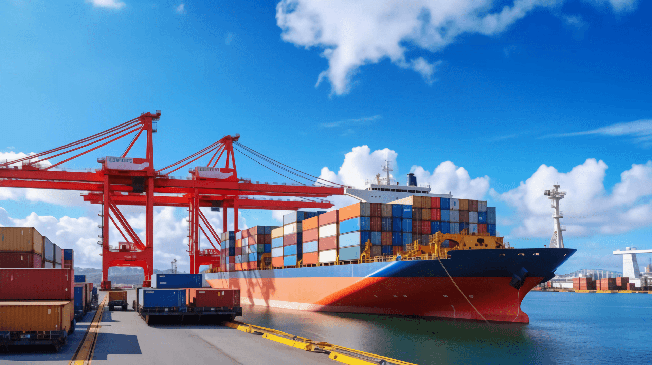
Importing from China remains one of the most cost-effective ways for North American businesses to source products at scale, but “cost-effective” only holds true if the supply chain behind it is built correctly. Every year, companies lose money not because Chinese manufacturing can’t deliver quality, but because the verification and relationship-building step gets skipped or rushed.
This guide walks through the practical side of the process: how to import goods from China, how to build a supply chain that can scale with your business, and most importantly, how to verify the suppliers and partners you’re trusting with your inventory, your cash flow, and your customer relationships.
Import Goods from China: Which Sourcing Model Fits Your Business?
- Օnline B2B supplier directories, industry trade publications, or trade shows
- A dedicated buying partner։ A person or small team based in China who manages supplier relationships, quality checks, and logistics on your behalf.
- A full-service sourcing company։ A larger organization offering end-to-end support: supplier vetting, product development, quality control, warehousing, and freight.
- Trading companies։ Middlemen who buy from factories and resell to you, often with less transparency into the original manufacturer.
Each model changes how much control, cost, and risk you carry. Here’s how they stack up:
| Model | Best For | Control Over Quality | Typical Cost Structure | Risk Level |
|---|---|---|---|---|
| Direct/DIY sourcing | Experienced buyers, simple products | Low–Medium (self-managed) | Product cost only | High, no local verification layer |
| Dedicated buying partner | Growing SMEs, recurring orders | High | Commission (5–15%) or flat fee | Medium |
| Full-service sourcing company | Scaling brands, complex products | High | Service fee + product cost | Low–Medium |
| Trading company | One-off or low-volume orders | Low | Marked-up product cost | Medium–High |
There’s no universally “best” option, the right structure depends on order volume, product complexity, and how much internal bandwidth you have to manage supplier relationships directly.
Where to Find a Reliable Supply Chain Partner in China
Whether you’re looking for a reliable China sourcing agent or comparing full-service sourcing companies, the search process follows many of the same principles. A few channels consistently produce better leads than a generic web search.
- Referrals from industry contacts. Personal recommendations from other importers, through trade associations, industry Facebook or LinkedIn groups, or import-focused forums, tend to be the most reliable starting point, since they come with a track record attached.
- B2B sourcing platforms. Global Sources, and Made-in-China list both suppliers and sourcing partners. These are useful for casting a wide net, but profiles should always be treated as a starting point, not a substitute for direct vetting.
- Trade shows. Events like the Canton Fair put you face-to-face with suppliers and partners, letting you assess communication style and professionalism before committing.
- Full-service sourcing companies. For buyers who want a single point of contact handling everything from supplier discovery through shipping, established sourcing companies typically offer more structure and more accountability than an independent freelancer.
A simple but effective first filter: check how a prospective partner presents themselves online. A professional, detailed website with clear service descriptions and pricing versus a bare-bones profile with no verifiable history, tells you a lot before the first conversation even happens.
Key Qualities to Look for in a Supply Chain Partner
Not every partner who can find you a factory is one you should work with long-term. The following criteria separate durable partnerships from ones that create problems down the line:
| Quality | Why It Matters | How to Verify It |
|---|---|---|
| Industry specialization | A partner who knows your product category knows the right factories and realistic pricing | Ask for examples of similar past projects |
| Transparent pricing | Vague or shifting fee structures often signal hidden markups later | Request a written breakdown of fees before signing anything |
| Communication proficiency | Miscommunication on specs or timelines is one of the most common causes of failed orders | Test responsiveness and clarity during initial inquiries |
| Established supplier network | A deep network means more backup options if one factory falls through | Ask how many suppliers they work with in your category |
| Technology and reporting | Real-time order tracking and documentation reduce the risk of surprises | Ask what tools or reports they provide during production |
| Openness to independent verification | Reluctance to allow third-party inspection is a significant warning sign | Confirm in writing that third-party QC is permitted |
Understanding Fee Structures Before You Commit
Pricing models vary widely, and the cheapest option on paper isn’t always the best value. Most partners operate on one of the following:
| Fee Model | How It Works | Best Fit | Watch Out For |
|---|---|---|---|
| Commission-based | A percentage of total order value, often 5–15%, frequently scaled down for larger orders | Recurring orders where fees should track with volume | Unclear whether commission is negotiated up front or added quietly |
| Flat project fee | A fixed cost regardless of order size | Smaller or one-off orders | Can be expensive relative to order value for small purchases |
| Monthly retainer | A set monthly rate covering ongoing sourcing support | Businesses with continuous, multi-project sourcing needs | Less cost-effective if sourcing activity is inconsistent |
| Margin-based | Partner marks up the product price rather than charging a separate fee | Buyers who prefer a single all-in price | Least transparent, harder to see the actual factory cost |
Whether you’re working with an industrial products sourcing agent or a broader sourcing partner, the fee structure alone shouldn’t determine your decision. A very low fee may reflect genuine cost savings, but it can just as easily indicate inexperience or shortcuts in supplier verification and quality control. Transparency about how your sourcing partner is compensated is far more important than the fee itself.
Building a Supply Chain from China That Actually Scales
A common mistake is treating supply chain building from China as a one-time project find a factory, place an order, done. In reality, a durable supply chain is built in layers:
- Layer 1: Supplier discovery. Identifying manufacturers with the right capacity, certifications, and product specialization.
- Layer 2: Verification. Confirming the supplier is legally registered, financially stable, and capable of what they claim (more on this below).
- Layer 3: Quality systems. Establishing inspection checkpoints pre-production, during production, and pre-shipment.
- Layer 4: Logistics infrastructure. Freight forwarding, customs documentation, and warehousing that can flex with order volume.
- Layer 5: Redundancy. A backup supplier for critical components, so a single factory issue doesn’t stall your entire operation.
This is especially true for equipment sourcing, where skipping the discovery process or supplier verification can lead to costly mistakes. Businesses that move straight to ordering without proper due diligence are the ones most likely to experience missed deadlines, off-spec products, or suppliers who stop responding after receiving a deposit.
Building a global supply chain from China also means planning for what happens outside China’s borders. Customs regulations in the U.S. and Canada, tariff classifications, and Incoterms (FOB, CIF, DDP) all affect your landed cost and need to be factored in from day one, not figured out after the first shipment is stuck at port.
The Supplier Verification Process in China: What It Actually Involves
This is the step most commonly rushed and the one with the highest financial consequence if skipped. A proper supplier verification process typically covers:
- Business license verification – Confirming the company is registered with China’s State Administration for Market Regulation (SAMR) and matches the name on your contract.
- Factory audit – Either in-person or via a third-party inspection service, confirming the supplier actually owns or operates the production facility (not just a trading office).
- Production capacity check – Verifying the factory can realistically meet your order volume and timeline without over-committing.
- Certifications and compliance – ISO, BSCI, product-specific certifications (CE, FCC, FDA where applicable) relevant to your industry.
- Financial stability review – Checking for signs of cash flow issues that could lead to a supplier folding mid-production.
- Sample and pre-production testing – Confirming the product matches spec before mass production begins.
Supplier Verification Checklist:
| Verification Step | What to Check | Common Red Flag |
|---|---|---|
| Business registration | Company name matches contract and bank details | Name mismatch or unregistered entity |
| Factory ownership | Supplier owns/operates the facility shown | Trading company posing as a manufacturer |
| Production capacity | Realistic timeline for your order size | Vague or overly optimistic lead times |
| Certifications | Valid, verifiable, industry-relevant | Certificates that can’t be traced to an issuing body |
| Financial health | Stable payment history, no major disputes | Insistence on 100% upfront payment |
| Sample quality | Matches agreed spec and materials | Sample differs from bulk shipment |
Verifying Chinese Suppliers: Beyond the Paperwork
Verifying Chinese suppliers isn’t only a compliance exercise, it’s a relationship test. Documentation confirms a supplier can do the work; ongoing communication confirms whether they’ll do it reliably.
A few practical signals worth watching for during early conversations:
- Response consistency. Do timelines and answers stay the same across multiple conversations, or do details shift?
- Willingness to allow third-party inspection. Reputable suppliers rarely object to independent quality checks.
- Transparency on subcontracting. Some factories subcontract parts of an order without disclosing it worth asking directly.
- Communication clarity. Language barriers are normal, but repeated miscommunication on specs or timelines is a warning sign, not a translation issue.
None of these signals are disqualifying on their own, but two or more together are usually worth pausing on before committing to a full production run.
China Import Products: What Categories Look Like in Practice
The products businesses import from China span nearly every category, but a few consistently show up across B2B import volume:
- Electronics and components
- Apparel, footwear, and textiles
- Furniture and home goods
- Industrial parts and machinery components
- Packaging materials
- Consumer goods for e-commerce (Amazon, Shopify, retail)
Whether you’re focused on material sourcing or finished product procurement, product complexity directly affects how rigorous your verification process needs to be. A generic packaging order carries far less risk than a custom electronics component with tight tolerances. The latter warrants factory audits and pre-production samples as a non-negotiable step, not an optional extra.
Common Mistakes Businesses Make When Importing from China
- Treating the first quote as the final price, without clarifying what’s included (tooling, packaging, freight)
- Skipping in-person or third-party factory verification to save time
- Underestimating lead times during peak seasons (Chinese New Year, Q4 holiday production)
- Not confirming Incoterms before shipment, leading to unexpected customs costs
- Relying on a single supplier for a critical component with no backup plan
- Choosing a sourcing partner based on the lowest fee alone, without checking references or past project history
- Failing to agree on communication cadence and reporting upfront, leading to blind spots during production
Frequently Asked Questions
How do I import goods from China as a first-time buyer?
Start with a clear product specification and budget, identify two to three verified suppliers rather than one, request samples before committing to bulk production, and confirm Incoterms and shipping method upfront.
How can I import goods from China without visiting in person?
Third-party inspection services can conduct factory audits and quality checks on your behalf, and video calls with the production floor are increasingly standard practice for remote verification.
What’s the minimum I should verify before placing a deposit?
At minimum: business registration, factory ownership, and a sample that matches your specification. Skipping any of these significantly raises risk on larger orders.
How long does supplier verification typically take?
For straightforward products, verification can take one to two weeks. For custom or highly regulated products, plan for three to four weeks to allow for certifications and sample testing.
GET A QUOTE