
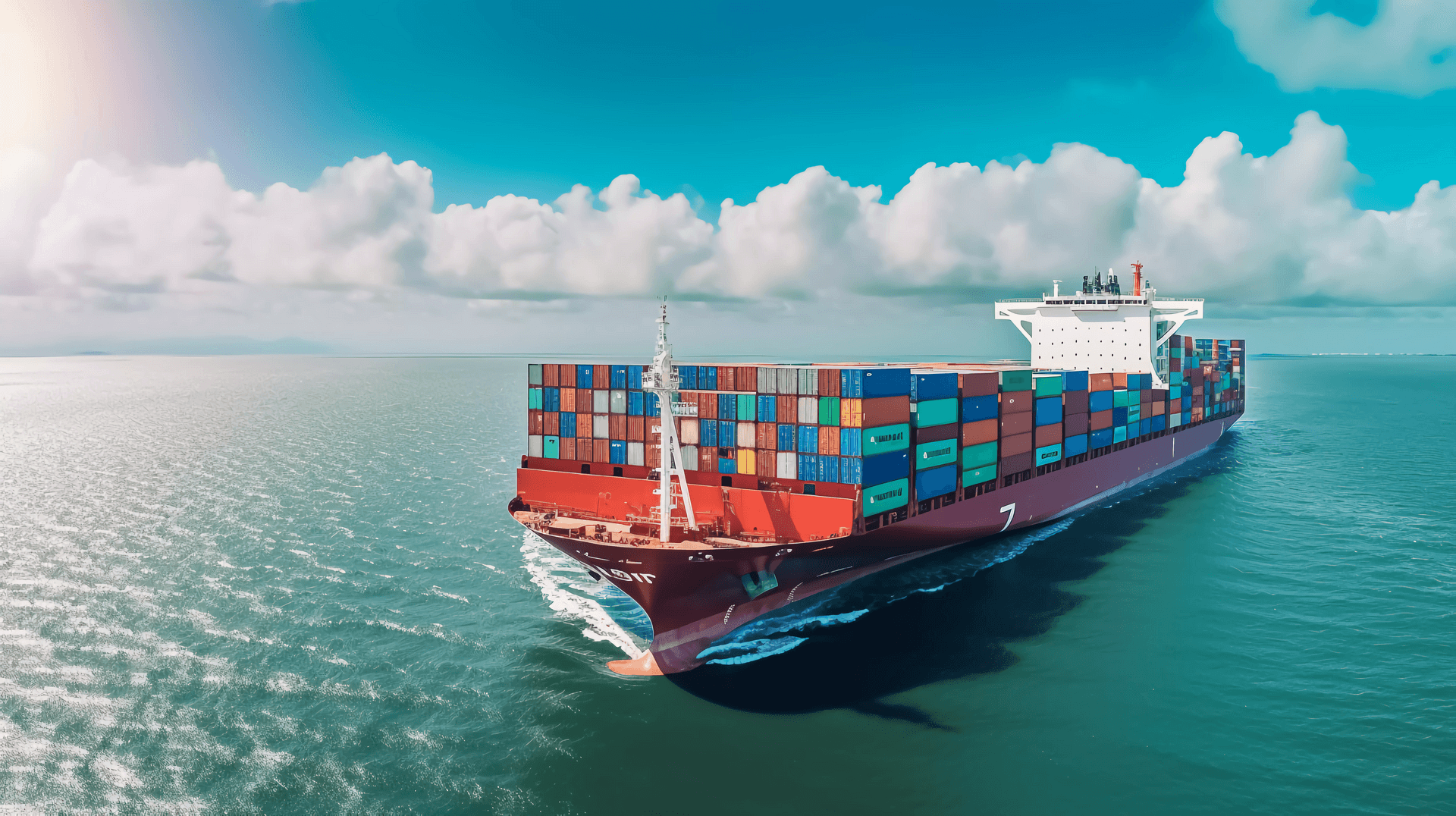
Planning to source components, materials, or equipment internationally means dealing with one certainty: shipments won’t always arrive when planned. A shipping delay can happen at a factory, at a port, at a border, or somewhere in between, and it rarely comes down to a single cause.
For a business that depends on incoming inventory to keep production running or projects on schedule, a delay is more than an inconvenience. It can disrupt manufacturing plans, strain cash flow, and put customer commitments at risk.
This guide breaks down why shipping delays happen, what they actually cost, how long they typically take to resolve, and what a procurement or operations team can do both to prevent them and to manage one that has already happened.
At a Glance
What It Means
A delayed shipment is still moving through the supply chain, just behind schedule. A delayed status does not necessarily mean the shipment is lost.
Main Causes
Documentation errors, port congestion, customs holds, capacity shortages, and weather are the recurring drivers.
Business Impact
Production downtime, project delays, and rising costs from expedited shipping or idle labor.
Duration
Varies widely by cause, route, and cargo type. Fixed timeframes are unreliable, planning flexibility matters more.
Prevention
Clean documentation, a realistic buffer, proactive tracking, and clear supplier communication reduce most avoidable risk.
When to Get Help
If delays are frequent or coordination across suppliers is getting harder to manage, a sourcing partner can close the gap.
What Is a Shipping Delay?
A shipping delay happens when a shipment does not arrive by the date it was originally expected to. That part is simple. What causes it, and what it means for your business, usually is not.
For a company that imports goods, materials, or components, a delay can happen at almost any point in the journey:
- Before the goods even leave the factory or warehouse
- While the shipment is in transit, by sea, air, or truck
- At a border or customs checkpoint
- During the final leg of delivery to your location
It helps to separate two things that are often confused:
Delayed
The shipment is still moving through the supply chain, but behind schedule. It has not been lost, it is simply running late.
Lost or Missing
The shipment cannot be located or tracked at all. This is rare, and it is a separate issue from a delay.
A tracking update that says “shipment delayed” usually means one specific step, such as loading onto a vessel, clearing customs, or leaving a port, happened later than planned. Once that step is resolved, the rest of the journey typically continues as normal.
For a manufacturer or procurement team that depends on incoming components or materials, even a short delay can affect production schedules, customer commitments, and cash flow. That is why understanding why delays happen, covered next, matters more than simply knowing what the status means.
Common Causes of Shipping Delays
Shipping delays rarely come from a single problem. Most of the time, they are the result of two or three factors happening at once. Broadly, the causes fall into four groups.
| Category | Common Causes | Who Usually Controls This |
|---|---|---|
| Paperwork and documentation | Missing, incomplete, or incorrect shipping documents; incorrect product descriptions or values | Supplier or shipper, largely preventable |
| Transportation and capacity | Limited space on a vessel or truck, port congestion, high-demand periods such as the holiday season | Carrier or port, partly manageable with planning |
| Border and customs checks | Extra inspections, unclear paperwork, restricted or regulated goods | Customs authority, manageable with correct documentation |
| Weather and unplanned events | Storms, natural disasters, mechanical breakdowns, labor strikes | No one, largely unavoidable |
Documentation issues are among the most preventable causes of cross-border shipping delays. Missing or incorrect paperwork is a frequent reason a shipment gets held up at a border or port, and it is also one of the easiest causes to address before a shipment leaves the factory.
Timing plays a bigger role than most people expect. Placing orders during high-demand periods increases the chance of delay simply because transportation capacity is limited across the board, not just for your shipment.
Some causes are genuinely outside anyone’s control. Weather and mechanical issues cannot be predicted far in advance, which is part of why planning around risk matters more than trying to prevent every possible delay.
For manufacturers and procurement teams, the practical impact of these causes usually shows up as component shortages, stalled production, or delayed project timelines rather than a simple late delivery. Knowing which category a delay falls into makes it easier to judge how much of it was preventable, and what to raise with your supplier or logistics partner the next time it happens.
International Shipping Delays: Why Cross-Border Orders Are Riskier
Domestic shipments only have to move from one point to another within the same country. International shipments have several extra steps in between, and each one is a place where a delay can happen.
What Adds Risk to a Cross-Border Order
Customs Clearance
International shipments are subject to destination-market customs entry and clearance requirements, and incomplete or inconsistent documentation can delay release.
Longer Transit Routes
Ocean and air routes cover far greater distances, which means more opportunity for weather, congestion, or scheduling changes to affect the timeline.
Multiple Parties Involved
A single international order can involve a supplier, a freight carrier, a customs broker, and a local delivery service. A delay at any one of these points affects the whole shipment.
Fixed Departure Schedules
Ships and planes leave on set schedules. If a shipment misses its slot, it may have to wait for the next available one, which can add days or weeks.
According to U.S. Customs and Border Protection, shipments can be selected for further review when documentation does not clearly match the goods being shipped, which is one of the reasons accurate paperwork matters as much as the shipment itself.
This is also why working with an experienced China sourcing agent can reduce risk for manufacturers and procurement teams that import regularly. A sourcing partner who supports supplier communication and documentation readiness from the origin side is often able to help catch and resolve issues before they turn into a full delay, rather than a business finding out only after the shipment is already held up.
None of this means international orders are unmanageable. It simply means they need more planning than a domestic shipment does, which is exactly what the next few sections cover.
Manufacturing Lead Time vs. Procurement Lead Time: Where Shipping Delays Hit Hardest
These two terms get used interchangeably, but they refer to different parts of the process, and mixing them up makes it harder to plan around a delay.
Manufacturing Lead Time
The time it takes to actually produce the goods, from order confirmation with the factory to the completion of production. Covers tooling, material availability, and the production run itself.
Procurement Lead Time
The full timeline from placing the order to having usable goods on-site. Includes manufacturing lead time, plus packing, inland transport, customs clearance, ocean or air transit, and final delivery.
A shipping delay does not affect manufacturing lead time directly, since production may finish exactly on schedule. What it does is extend the procurement lead time, which is the number a business actually plans deliveries, production schedules, and customer commitments around.
This distinction matters in practice. If a manufacturer assumes procurement lead time will always match manufacturing lead time plus a fixed shipping estimate, a single delay in transit or at customs can throw off the entire downstream schedule, even though nothing went wrong at the factory. The effects tend to show up as:
- Production lines waiting on components that have not yet cleared customs
- Assembly or project schedules shifting because one shipment in a larger order is running behind
- Procurement teams having to coordinate with suppliers and internal production planning at the same time, often on short notice
A delay in receiving electronic components or industrial materials sourced from China can stall an entire production line, even when the factory itself delivered on time. This is why procurement lead time, not manufacturing lead time alone, is the number worth tracking closely when planning around shipping risk.
The Real Cost of a Shipping Delay
A shipping delay is not just a scheduling inconvenience. For a manufacturer or industrial buyer, it usually comes with a real financial impact, even if that impact is not always obvious right away.
| Cost Type | What It Looks Like in Practice |
|---|---|
| Direct costs | Expedited shipping fees, storage or warehousing charges, rush production costs to make up lost time |
| Production impact | Production downtime while waiting on components or materials, idle labor and equipment, disrupted production planning |
| Project and delivery impact | Delayed project milestones, missed installation or commissioning dates, contract penalties tied to fixed deadlines |
| Operational strain | Staff time spent tracking shipments, coordinating with suppliers, and adjusting internal schedules |
Some industries feel this more sharply than others. A business involved in construction industry sourcing from China, for example, often works against fixed project deadlines. A delay in receiving equipment or materials can hold up an entire project timeline, not just one order, and may carry penalty clauses or added on-site labor costs as a result.
The U.S. Bureau of Transportation Statistics tracks freight performance data that shows how disruptions at ports and border crossings can affect supply chains beyond the original shipment, which is part of why the cost of a delay is often larger than the delay itself suggests.
The good news is that most of these costs are avoidable, or at least reducible, with the right planning. That starts with understanding what actually influences how long a delay lasts, which is the focus of the next section.
What Affects How Long a Shipping Delay Lasts
There is no single, reliable timeframe for how long a shipping delay will last. The actual duration depends on the route, the carrier, the port involved, the type of cargo, the specific customs situation, and the nature of the disruption. Rather than fixed estimates, it is more useful to understand what drives the duration in each case, and what to do first when it happens.
| Cause of Delay | What Affects the Duration | What the Buyer Should Do First |
|---|---|---|
| Missing or incorrect documentation | How quickly corrected paperwork can be prepared and resubmitted, and how the specific customs office processes it | Confirm exactly what is missing or incorrect, and get corrected documents moving as soon as possible |
| Port congestion | Overall volume at that port, time of year, and whether alternative ports or routes are available | Ask your carrier or forwarder for a revised estimated arrival and whether rerouting is an option |
| Customs inspection | The type of goods, the destination country’s inspection process, and whether the shipment was randomly selected or flagged | Confirm the reason for the hold and whether any additional information or action is required from your side |
| Weather disruptions | Severity, region, and how quickly the affected port or route resumes normal operations | Monitor updates from the carrier and avoid assuming a fixed recovery time |
| Carrier capacity issues | Availability of space on the next scheduled departure, and how full upcoming sailings or flights already are | Ask whether the shipment can be moved to an earlier available slot or split across departures |
| Labor strikes or major disruptions | Scope of the disruption, whether it affects one terminal or an entire region, and how it is resolved | Assess whether alternative ports, routes, or transport modes are realistic for this shipment |
These situations often overlap. A shipment affected by port congestion during a high-volume period may also face a longer customs queue, which extends the total time beyond what either issue would cause on its own.
The right response depends on the specific shipment. A time-sensitive component for an active production line may justify rerouting or expediting, while a lower-priority shipment may not.
Businesses that regularly work with an experienced Procurement Partner tend to get clearer, earlier visibility into which of these situations is affecting a shipment, which makes it easier to make an informed decision rather than simply wait it out.
Understanding what drives a delay is useful, but the more valuable question is how to reduce the risk of one happening in the first place. That is what the next section covers.
Shipping Delay Solutions: How to Prevent and Manage Them
While some delays cannot be avoided entirely, most of the risk can be reduced with the right habits in place before a shipment ever leaves the factory.
- Double-check documentation before shipping. Reviewing paperwork in advance addresses one of the most preventable causes of cross-border delay before it becomes an issue at the border.
- Build a buffer into your lead time, sized to the shipment. How much buffer makes sense depends on the transport mode, the route, the time of year, how dependent production is on that specific shipment, and how costly a late delivery would be. A high-value, production-critical shipment during peak season generally warrants a larger buffer than a routine, low-priority order.
- Avoid placing time-sensitive orders right before peak season. Ordering ahead of high-demand periods reduces the chance of running into capacity shortages or port congestion.
- Track shipments proactively. Following the shipment status regularly means you catch a delay early, rather than finding out only when a production or delivery deadline is already at risk.
- Keep communication open with your supplier. A supplier who understands your production timelines is more likely to flag a potential delay early, giving you time to adjust.
- Work with an experienced sourcing or logistics partner. Support with supplier coordination and documentation readiness from the origin side can help catch and resolve issues before they turn into a shipment-wide delay.
Some of this depends on the type of goods being shipped. Businesses sourcing agricultural machinery or new energy equipment from China often deal with larger, higher-value shipments where a delay carries more financial and project risk. For these kinds of orders, the planning steps above matter even more, since a delay is harder and more expensive to absorb after the fact.
None of these solutions guarantee a delay will never happen. What they do is reduce how often delays occur, and reduce how much damage they cause when they do. The next section covers what to do when a delay has already happened, despite this planning.
What to Do When an International Shipment Is Already Delayed
Even with good planning, delays sometimes happen. Once a shipment is already behind schedule, having a clear set of next steps matters more than trying to figure out who is at fault.
A Simple Action Plan
Identify Exactly Where the Delay Occurred
Check whether the shipment is held at the factory, in transit, at a port, or at customs. Knowing the specific stage tells you who to contact and what kind of resolution is realistic.
Get a Revised Estimated Arrival
Ask your supplier, carrier, or forwarder for an updated timeline rather than relying on the original schedule. This becomes the number you plan around going forward.
Check What Action Is Required From Your Side
Some delays, particularly at customs, cannot move forward until specific paperwork or information is provided. Confirm this early to avoid losing additional time.
Assess the Impact on Production or Inventory
Determine which production runs, projects, or customer commitments depend on this shipment, and how much flexibility exists in those schedules.
Evaluate Alternative Options Where Necessary
For production-critical shipments, this may mean sourcing a short-term replacement, adjusting the production sequence, or exploring an alternative transport method for the delayed goods.
Update Timelines and Communicate the Change
Once a revised arrival date is confirmed, update internal production schedules and let affected customers or project stakeholders know, rather than waiting until the delay becomes visible on its own.
Working through these steps in order helps limit how far a single delayed shipment spreads into the rest of your operation.
When to Bring In a Sourcing Partner
Handling shipping delays on your own works fine when they happen occasionally, and when your team has time to manage the extra communication and problem-solving involved. It becomes a different situation when delays start happening often enough to affect how your business runs.
A few signs that it may be time to bring in outside support:
- Delays are becoming a pattern, not an exception. If shipments regularly run late for one reason or another, the issue is likely systemic rather than a string of bad luck.
- Your team is spending significant time managing delays instead of running the business. Time spent chasing suppliers, tracking shipments, and rearranging production schedules is time not spent elsewhere.
- You are coordinating multiple suppliers or product categories. Managing documentation and supplier communication across several sourcing relationships gets harder to do accurately as it scales.
- The cost of a delay is high enough to justify prevention. Larger or more complex orders carry more financial and project risk if something goes wrong, which makes proactive coordination worth the investment.
It is worth being clear about what a sourcing partner does and does not control. A China sourcing agent does not operate the ships, planes, or customs offices involved in getting a shipment from China to North America. Freight carriers, forwarders, customs brokers, and customs authorities still manage their respective parts of that process. What a sourcing partner typically supports is the origin side of the equation: supplier communication, production timeline tracking, documentation readiness, quality control before goods ship, shipment consolidation, and coordination with the logistics providers who handle the actual transport.
How Sourcing Captain Helps Reduce Shipping Delay Risk
For manufacturers and procurement teams dealing with recurring supplier or shipping delays, origin-side coordination is often what closes the gap between a factory that produces on time and a shipment that actually arrives on time.
If your team is managing supplier communication, documentation, quality control, and delivery coordination from China largely on your own, Sourcing Captain works alongside you to handle those pieces, so fewer issues turn into delays in the first place.
FAQs
What does it mean when a shipment is delayed?
It means the shipment is still moving through the supply chain, but a step in the process, such as loading, customs clearance, or departure, happened later than planned. A delayed status does not necessarily mean the shipment is lost.
What are the most common causes of shipping delays?
Common causes include missing or incorrect documentation, port congestion, limited transportation capacity during busy periods, customs inspections, and weather disruptions. Documentation issues are among the most preventable of these.
How long does a shipping delay usually last?
It depends on the cause, the route, the carrier, and the specific customs situation involved. A documentation issue may resolve within a few days, while port congestion or a major disruption can extend a delay to several weeks. There is no single buffer that works for every shipment, so the right amount of extra time depends on the transport mode, route, seasonality, and how production-critical the shipment is.
How much does a shipping delay actually cost a business?
Costs can include expedited shipping fees, storage charges, production downtime, delayed project milestones, and the staff time needed to manage the situation. For larger or production-critical orders, the cost of a delay is often higher than businesses expect.
Can shipping delays be prevented completely?
Not entirely. Some causes, like weather or major disruptions, are outside anyone’s control. However, many delays caused by documentation, planning, or communication issues can be significantly reduced with the right process in place.
When should a business consider working with a sourcing partner?
When delays become frequent, when coordinating multiple suppliers becomes difficult to manage accurately, or when the financial and project risk of a delay is high enough that proactive coordination becomes worth the investment.